
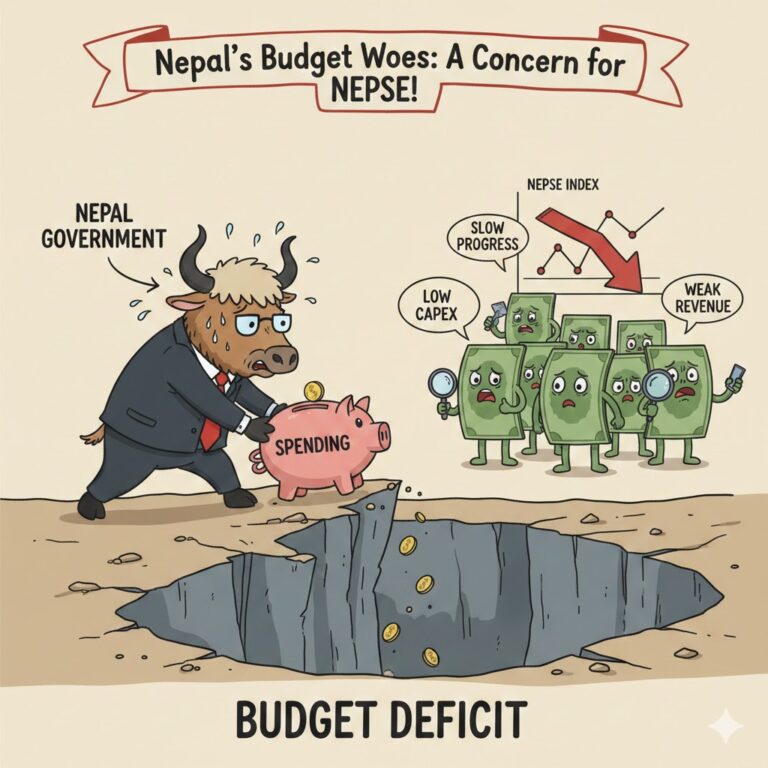
The Nepal government budget performance is showing weak progress in the current fiscal year, and this news is important for NEPSE investors, stock market traders, and people closely following the Nepal economy.
According to the Financial Comptroller General Office (FCGO), the government has spent only eight percent of capital expenditure till December 15. The total capital expenditure spending reached just Rs 33.87 billion, even though the government had allocated a massive Rs 407.88 billion under the capital expenditure budget for this fiscal year.
Low capital expenditure in Nepal often impacts infrastructure development, construction companies, hydropower stocks, and overall NEPSE market sentiment.
Current Expenditure Also Below Expectations
Under the current expenditure heading, the government allocated Rs 1,180.98 billion. However, only 33.7 percent, or about Rs 398 billion, has been spent so far.
Similarly, under the financial management expenditure, the government allocated Rs 375 billion, but only Rs 132 billion (35.32 percent) has been used till mid-December.
Overall, out of the total annual budget of Rs 1.964 trillion, only 28.74 percent (around Rs 564 billion) has been spent. This slow government spending in Nepal is being closely watched by NEPSE analysts and share market investors.
Weak Revenue Collection Adds Pressure
The government revenue collection is also weak. The target for this fiscal year was Rs 1.533 trillion, but only Rs 414 billion (27 percent) has been collected in the first five months.
For the first five months, the revenue target was Rs 520.44 billion, which the government failed to meet. Between November 17 and December 15, only Rs 80.27 billion in tax revenue was collected, against a target of Rs 95.20 billion.
So far:
- 28.83 percent of the annual tax revenue target (about Rs 382.23 billion) has been collected
- Only 15.59 percent of the non-tax revenue target (about Rs 24.70 billion) has been achieved
This weak tax revenue collection in Nepal may affect banking stocks, finance companies, and overall NEPSE index performance.
Foreign Grants and Budget Deficit Situation
The government had expected to receive Rs 53.44 billion in foreign grants this year. However, only 9.58 percent, or about Rs 5.12 billion, has been received so far.
Due to low revenue collection and slow capital spending, the budget deficit in Nepal has increased sharply. The deficit has reached around Rs 150 billion, meaning government expenditure exceeds revenue by about Rs 149.56 billion.
This growing budget deficit is a key concern for the Nepal stock market, NEPSE investors, and the overall macroeconomic outlook of Nepal.
Disclaimer
Meroshare.net is an independent website and is not affiliated with CDSC, NEPSE, SEBON, or the official MeroShare platform. For account-related issues, contact your broker or the relevant authorities directly.
The content in this page is based on publicly available sources and is provided for informational purposes only. It may contain inaccuracies or outdated information and does not constitute financial or investment advice or a recommendation to buy, sell, or hold any securities.
Always conduct your own research and consult qualified professionals before making investment decisions. For official information, refer directly to the relevant companies or authorities.